

Varieties & Seasons

Nutrition & Health

Recipes

Australian Summerfruit. Naturally Good.

Peaches, nectarines, plums and apricots grown across Australia. Naturally sweet, packed with nutrients and at their best from late spring through to autumn.

Find seasonal recipes →


Meet the fruits

Peaches

Juicy, fragrant and a summer classic. Australian Peaches are grown across the country.

Nectarines

Sweet and firm with a bright, clean flavour. Australian Nectraines are grown nationwide.

Plums

From golden to deep purple, Australian plums range greatly in shape, size, and flavour.

Apricots

Small but full of flavour. Australian Apricots have a short season, enjoy them when you can.

Find what you need

Australia grows over 380 varieties of summerfruit, spanning yellow and white flesh peaches and nectarines, red and black plums, and sweet apricots.
Peaches

Peaches (Prunus persica L.)

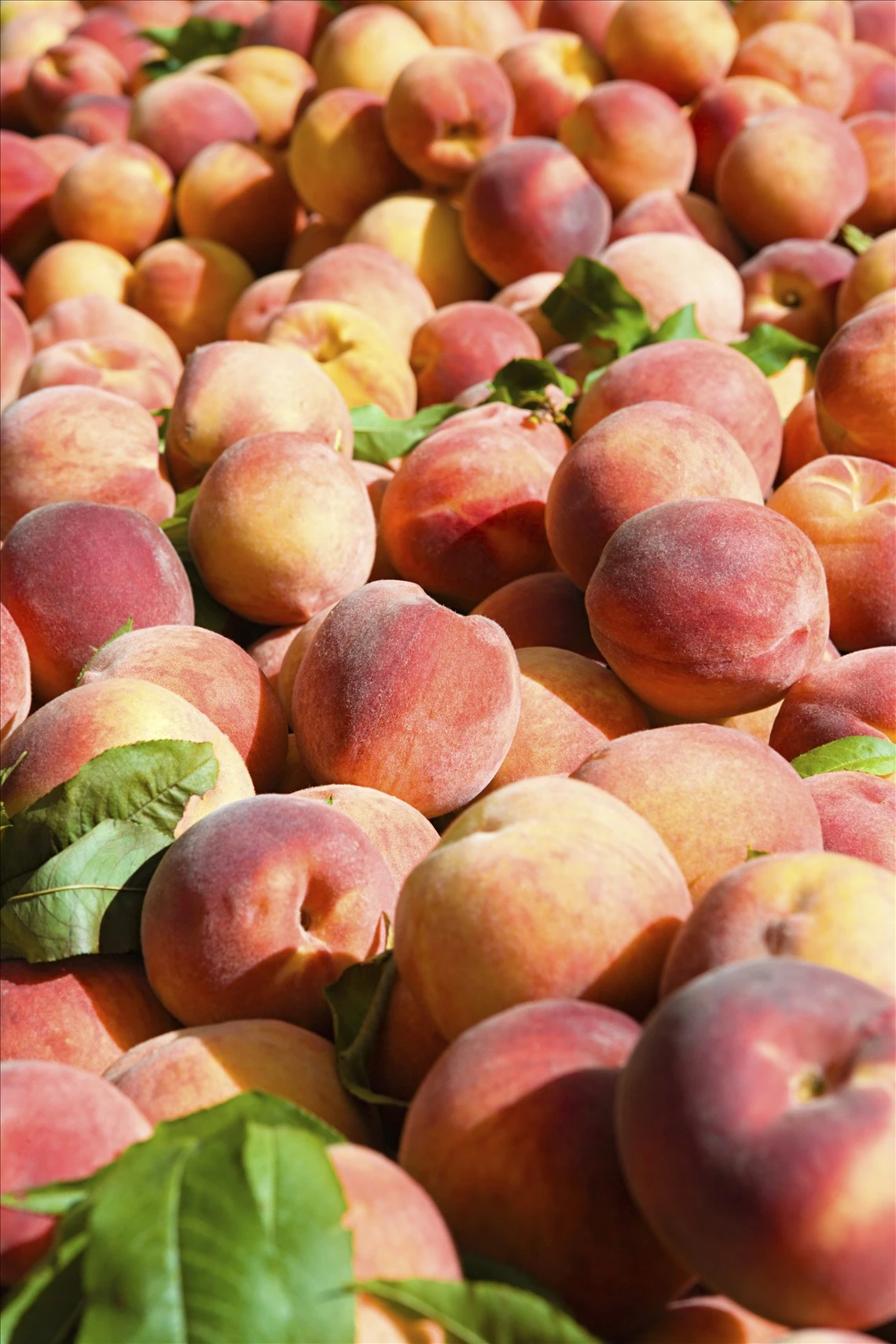
Peaches are recognised by their characteristic velvety skin and fragrant aroma. Australian peaches come in two broad categories yellow flesh and white flesh each with its own flavour profile and culinary character.

Yellow flesh peaches deliver a classic sweet/tangy balance with a firm, juicy bite. Varieties include Rich Lady, Flordagold, and Zee Lady. Ideal for grilling, jams, chutneys, and baking.

White flesh peaches are milder and more floral, with a low acid sweetness and a smooth, melting texture when fully ripe. The White Lady is one of Australia’s best known white flesh varieties. Perfect for eating fresh, pairing with soft cheese, or using in delicate desserts.

Pairs well with: Yoghurt, granola, pork, chicken, pavlova, ricotta

Nectarines

Nectarines (Prunus persica L. var. nucipersica)

Often described as the smooth skinned cousin of the peach, nectarines have a highly aromatic flesh and a vibrant sweet/tart flavour. Like peaches, they come in yellow and white flesh varieties.

Yellow flesh nectarines are bold and fruity, with a zesty edge and a firm-to-juicy texture depending on ripeness. Varieties include Fantasia, Summer Fire, and Arctic Rose. Great sliced into salads, grilled, or served with prosciutto and aged cheese.

White flesh nectarines are more refined in sweetness, with a floral, delicate flavour and a silky, melting texture. Arctic Snow is one of the most popular white nectarine varieties. Excellent on fruit platters, in tarts, or paired with soft greens and a light vinaigrette.

Pairs well with: Cheese platters, frozen yoghurt, salads, prosciutto, nuts

Plums

Plums (Prunus domestica L.)

Australian plums are diverse in skin colour, size, and flavour, ranging from sweet yellow varieties through to dark skinned plums with rich, complex flesh.

All have a natural bloom on the skin when ripe, and their juicy flesh varies from firm and crisp to soft and melting depending on variety and maturity. Popular Australian varieties include Black Diamond, Black Amber, Amber Jewel, Fortune, Angeleno, and so many more.

Pairs well with: Balsamic dressings, game meats, ice cream, stewed desserts, soft cheese

Apricots

Apricots (Prunus armeniaca L.)

Small but intensely flavoured, Australian apricots are a golden/orange fruit with a velvety skin and a flesh that transitions from firm and tangy when slightly underripe to beautifully sweet and yielding at peak ripeness.

Their flavour develops as they soften, making them one of the most aromatic of the summerfruit family. Australian varieties include Trevatt, Glengarry, Bulida, and Plumcot.

Apricots are equally popular fresh or dried, and are grown primarily in Victoria’s Goulburn Valley and Swan Hill, South Australia’s Renmark, and Western Australia’s Perth Hills.

Pairs well with: Yoghurt, morning cereal, couscous, grain salads, lamb, soft cheese

Why summerfruit is good for you?

When is Australian summerfruit in season?

Australian summerfruit is at its best from late spring through to autumn. Different fruit varieties peak at different times of the season, so there’s always something ripe to enjoy.

Type Nov Dec Jan Feb Mar Apr
Peaches Category Icon Set-04 Category Icon Set-04 Category Icon Set-04 Category Icon Set-04 Category Icon Set-04
Nectarines Category Icon Set-05 Category Icon Set-05 Category Icon Set-05 Category Icon Set-05 Category Icon Set-05
Plums Category Icon Set-03 Category Icon Set-03 Category Icon Set-03 Category Icon Set-03 Category Icon Set-03
Apricots Category Icon Set-06 Category Icon Set-06 Category Icon Set-06
Selection & Storage

How to choose and store Australian summerfruit

01.

Choose

Look for fruit that feels firm but gives slightly when gently pressed near the stem. A sweet aroma is a good sign of flavour to come.

02.

Store

Keep unripe fruit at room temperature, stem end down, until it softens. Once ripe, transfer to the fridge and enjoy within a few days.

03.

Serve

Bring fruit back to room temperature before serving for the best flavour. A chilled peach tastes less sweet than a room-temperature one.

Genuinely good for your health

Towards a brighter, cleaner future

Nutrition & Health Benefits of Australian Summerfruit

Australian summerfruit is genuinely good for you, and the evidence supports it. As a category, summerfruit is naturally low GI, low in fat, and rich in dietary fibre, vitamins, and antioxidants. They’re a practical, delicious way to support overall health as part of a balanced diet.

Low GI Sustained Energy Without the Spike

All summerfruit sits in the low glycaemic index (GI) category, meaning they release energy gradually rather than causing rapid blood sugar spikes. This makes them a smart choice for sustained energy throughout the day, for managing appetite, and for people monitoring blood sugar levels as part of a healthy diet.

Rich in Vitamins A, C, and E

Summerfruit across the board are excellent sources of vitamins A, C, and E. That’s a trio of nutrients that support immune function, skin health, and cellular protection!

Vitamin C in particular supports iron absorption and immune response, while vitamins A and E act as antioxidants that help protect cells from oxidative damage.

Antioxidant Powerhouses

Summerfruit, particularly plums and apricots, are rich in flavonoids and betacarotene, antioxidants associated with reduced inflammation and a lower risk of chronic disease including cardiovascular disease, obesity, and type 2 diabetes.

Dietary Fibre for Digestive Health

Peaches, nectarines, plums, and apricots all provide dietary fibre, which supports a healthy digestive system, promotes feelings of fullness, and contributes to bowel regularity. Plums in particular have long been associated with digestive health, they contain both fibre and sorbitol, a natural compound that supports regularity.

Heart Health and Blood Pressure

The potassium content in summerfruit plays a role in blood pressure regulation. Adequate potassium intake is associated with healthy cardiovascular function and reduced risk of hypertension.

Did you know:

  • Peaches have ~60mg of potassium / serve
  • Nectarines have ~201mg of potassium / serve

Skin Health

Nectarines contain niacin (vitamin B3), which supports healthy skin and a functioning digestive system. Combined with vitamins C and E, which support collagen production and protect against UV related cellular damage, summerfruit is a natural ally for skin health from the inside out.

Clinical Nutrition Reference

For Health Professionals

Nutritional information reviewed by Jemma O’Hanlon, Accredited Practising Dietitian and Accredited Nutritionist, former Director, Dietitians Australia.

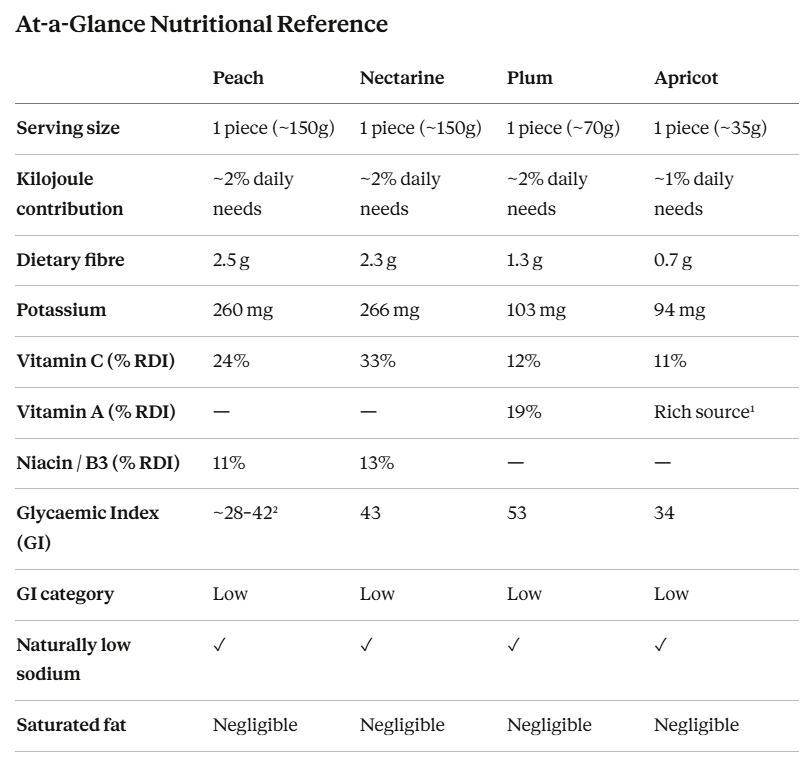
Australian summerfruit is low in energy, naturally saturated fat free and low in sodium, with a low glycaemic index across all fresh varieties. The category provides meaningful dietary fibre, potassium, vitamin C, vitamin A, and niacin (vitamin B3), along with a range of phytonutrients including flavonoids, beta-carotene, and anthocyanins, particularly concentrated in darker skinned plums and cherries.

More fruit facts

Key nutritional highlights by fruit type

Peaches are a source of vitamin C (24% RDI per serve) and niacin (11% RDI), and contain potassium relevant to blood pressure support. They provide anti-inflammatory, antimicrobial and antioxidant properties, and may offer potential benefits for digestion, immune function and cardiovascular health.

Nectarines are the highest source of vitamin C in the summerfruit category (33% RDI per serve) and a good source of niacin (13% RDI). Vitamin C supports iron absorption from plant-based foods, immune function, collagen synthesis, and skin health. Nectarines are naturally sodium-free and saturated fat-free, with a GI of 43.

Plums provide vitamin A (19% RDI per serve) and vitamin C (12% RDI), along with vitamins K and B6, potassium, copper, and manganese. They are a source of polyphenols and anthocyanins, particularly concentrated in dark skinned varieties including Queen Garnet, associated with antioxidant and anti-inflammatory activity. Plums have a GI of 53, the highest within the summerfruit category, though still within the low GI range.

Apricots are low in kilojoules (1% daily needs per piece) and rich in vitamin A and beta-carotene, relevant to eye health, immune function, and cellular protection. They are a source of flavonoids associated with reduced inflammation. Apricots have the lowest GI in the summerfruit category at 34. Naturally low in sodium and saturated fat-free.
Inspiring Australian home cooks, everyday.

Recipes

From a 5 minute breakfast to a show stopping summer dessert, Australian summerfruit belongs in every kitchen. Browse recipes by fruit type or meal occasion, each one designed to make the most of what’s in season.

View all Recipes

Loading...